8th September 1929 – 13th June 2024
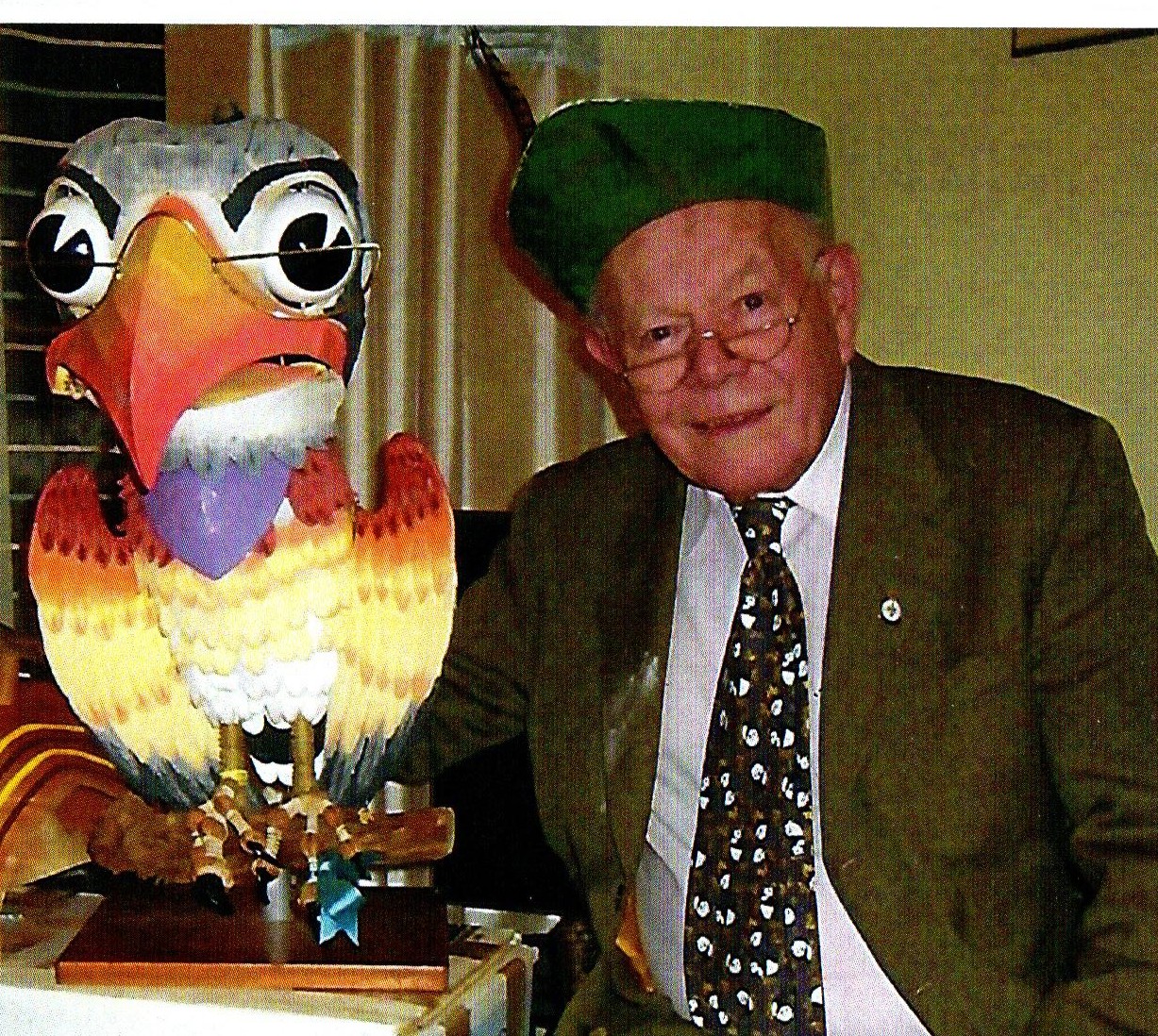
Chris Heath was a long-standing member of the Society, in later years as a Life member.
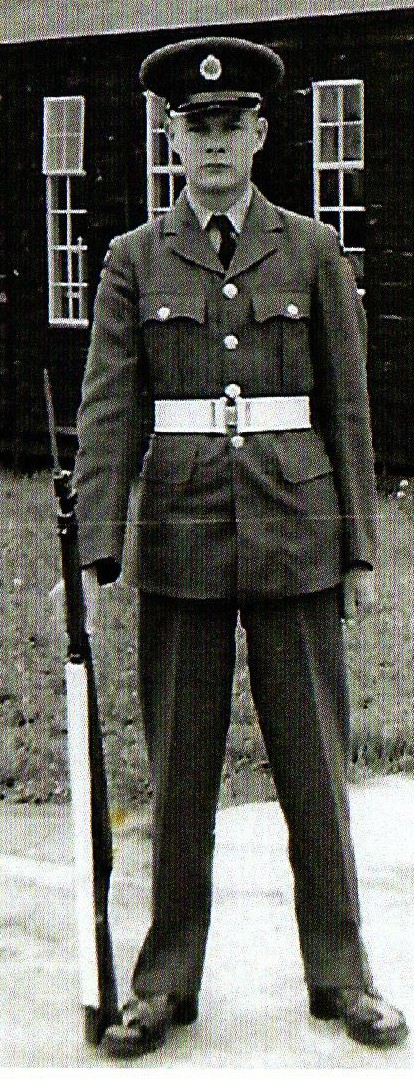
Chris had a remarkable career, first as an engineer at a world-renowned firm, the Electric Construction Company in Wolverhampton, where he served a successful apprenticeship. Such was the skill that he acquired, after completing his basic RAF National Service training, he was summoned for an interview in London. The process was very ‘hush-hush’, because he was wanted for top-secret work on the control system for the Avro Vulcan jet bomber, intended as a delivery aircraft for the UK’s nuclear weapons, which meant he was also vetted by MI5. Chris told me that he was instructed to travel from his living quarters to his office by a different route each day, to avoid the possibility of being noticed by enemy agents.
On his return to the ECC, he was chosen to work on what was then a very innovative way of working, the introduction of computers to operating systems. However, as is so often has been the case in the UK, the company lost interest, so Chris found employment on the use of computers at another well-known company, Britool Ltd., then located in Bushbury in Wolverhampton. Sadly, the same complacent attitude eventually prevailed there and Chris lost his job, but he soon moved to a company in Birmingham, where his career prospects didn’t improve.
This lack of enthusiasm made Chris to decide to use another pathway to encourage the use of computers – he joined the staff at Wulfrun College to teach computing to a new generation of students. He later went further up the educational scale by securing a similar post at Wolverhampton & Staffordshire College of Technology, now Wolverhampton University, and in the same building on Wulfruna Street where Wolverhampton Astronomical Society now holds its meetings.
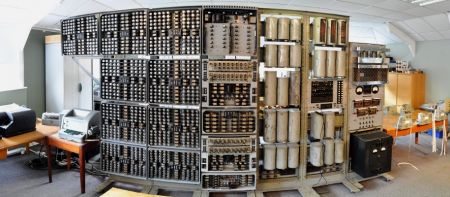
In 1957, Wolverhampton & Staffordshire College of Technology won a competition to obtain a redundant ‘decatron’ computer from the Atomic Energy Research Establishment at Harwell. It was installed at the college, where it became known as the WITCH computer, an acronym for ‘Wolverhampton Instrument for Teaching Computation from Harwell’. Chris operated this very special computer when teaching computational skills to students at the college.
As a student at the college myself in the late 1950’s, I remember the WITCH computer, but only clacking away behind close doors. It was only directly accessible to advanced students of mathematics. After technological progress had rendered the WITCH computer redundant in 1973, it spent many years in a Birmingham storeroom. However, it was rediscovered and transferred to the computing section at Bletchley Park, where it has now been restored, proudly described as ‘the oldest first generation computer anywhere in the world’. That’s something which really pleased Chris.
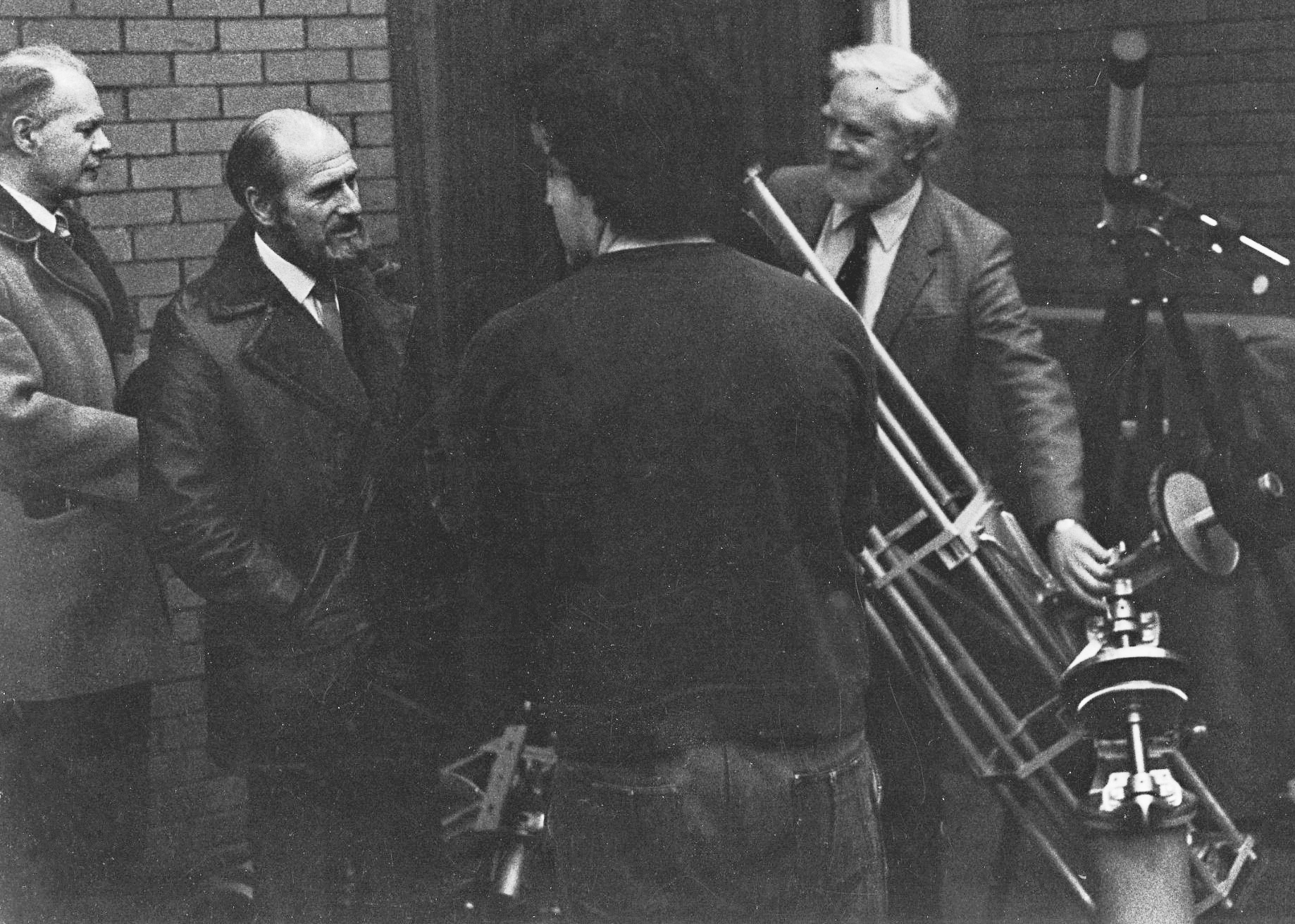
Chris and his brother Roger were active members of the Society, Roger serving a term as President in 1980-81.
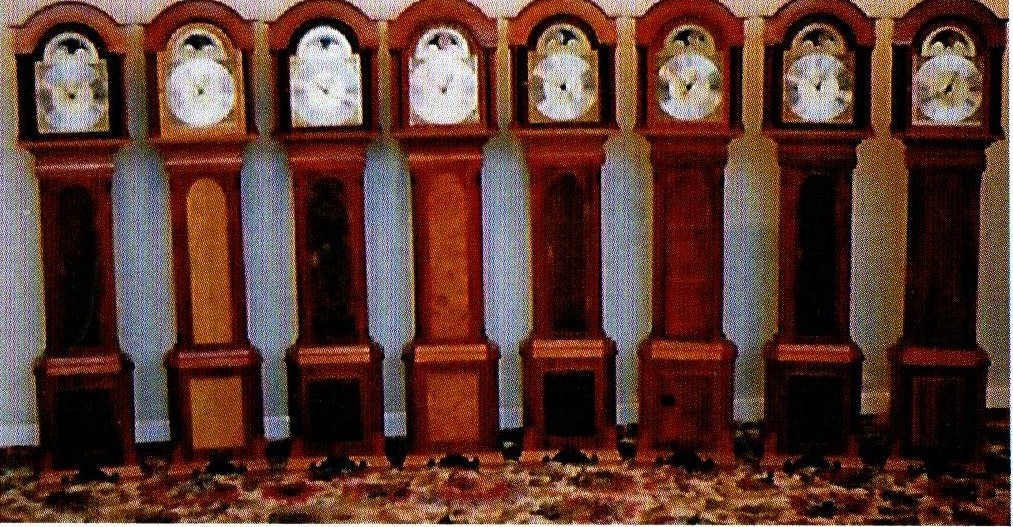
I visited Chris at his home on several occasions, because I used to deliver the Society newsletter to him personally. He was the only member NOT to have a working email address! He told me that after retiring from a lifetime spent with computers, he wanted choose other ways to enjoy his retirement. So I became aware of his other hobbies, which themselves required considerable skill. Chris still had a functioning high quality lathe in his workroom, which helped him produce many miniature ‘grandmother’ clocks for family members, shown in the photograph below. Each clock has tiny mice climbing up the driving weight chains, one of which now stands atop my own desktop computer.
At his memorial service, his daughters Wendy and Cheryl and granddaughter Kiera, remembered how Chris would invent humorous bedtime stories, which brought into play his knowledge of so many subjects, a means of teaching through entertainment.
On behalf of the Society, I would like to extend our sincere condolences to daughters Wendy and Cheryl and their respective families.